| |
| Monday, 12 October 2026 |
| Roger Fry, the Omega Workshops and the 1910 Artquake |
| David Boyd Haycock |
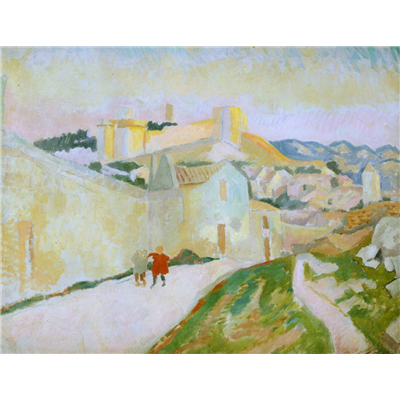 |
Roger Fry was one of the most influential figures in twentieth-century British art. A member of the Bloomsbury Group, he curated the groundbreaking exhibition ‘Manet and the Post-Impressionists.’ Featuring work by Gauguin, Picasso, Matisse, Cézanne and Van Gogh, the ‘“artquake” of 1910’ transformed perceptions of art in Britain forever. Intent on making the British public more attentive to beauty, in 1912 he founded the Omega Workshops, employing young artists to produce highly original household goods for the middle and upper classes. Yet he was also a divisive figure – ‘a shark in aesthetic waters,’ as Paul Nash called him. This lecture explores the life and impact of this extraordinary man. David Boyd Haycock Dr David Boyd Haycock is a freelance art historian and curator. He is best known for his 2009 book, A Crisis of Brilliance: Five Young British Artists and the Great War, and the subsequent exhibition he curated at Dulwich Picture Gallery (2013). Educated at the University of Oxford, he is a specialist in British art and culture in the period 1848 to 1945. He is the curator of an exhibition Art Then! British Art 1910-1960 opening in October 2026 at Southampton City Art Gallery. The doors and the bar at Thornden Hall Arts Centre are open from 18.45; talks start at 19.30 lasting an hour with additional time for Q & As. Talks are free for members; visitors pay £8 on the evening - card only. All members and visitors need to sign in at the respective desks in the foyer for each talk. Image credit: Roger Fry, Fort St André, 1913. Southampton Cultural Services |
|
| Monday, 09 November 2026 |
| Dame Laura Knight |
| Rosalind Whyte |
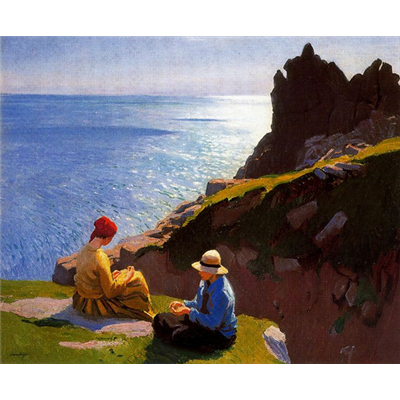 |
In 1936 Dame Laura Knight became the first woman to be elected as a full member of the Royal Academy in London, 168 years after its establishment. In her extraordinary career she painted landscapes, portraits and seascapes, as well as scenes from the circus, the ballet and the theatre. She was the only woman to be given War Commissions in both the First and Second World Wars and the only British artist to cover the Nuremberg Trials of 1946. This lecture provides an overview of her fascinating career and some of the remarkable achievements of her long life. Rosalind Whyte Rosalind gained a BA and MA from Goldsmith’s College, and an MA (distinction) from Birkbeck College. She is an experienced guide at Tate Britain, Tate Modern, the Royal Academy and Greenwich and lectures at the Tate, to independent art societies and on cruises. The doors and the bar at Thornden Hall Arts Centre are open from 18.45; talks start at 19.30 lasting an hour with additional time for Q & As. Talks are free for members; visitors pay £8 on the evening - card only, All members and visitors need to sign in at the respective desks in the foyer for each talk. Image credit Laura Knight, On the Cliffs 1917 Private Collection via Creative Commons |
|
| Monday, 14 December 2026 |
| Britain vs the Bauhaus: modern design in the 1930s |
| Julia Musgrave |
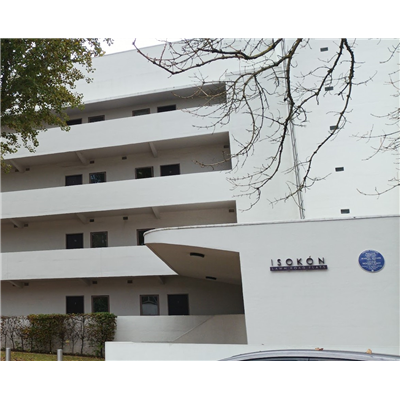 |
Staatliches Bauhaus was an art school founded under the Weimar Republic by the architect Walter Gropius. From 1919 to 1933 its tutors combined crafts and the fine arts in a radical new approach to design education. Less well known is the influence of the Bauhaus and other German design schools on design and art education in Britain in this period. As the impact of the economic ‘Slump’ of c.1929-34 hit British manufacturing sales, many in local and national government believed that Britain’s struggling industrial base could be improved by better design education. This lecture looks at the work of the key artists involved in this: including Paul Nash, Eric Ravilious, Vanessa Bell, Duncan Grant and Roger Fry; and at Unit One – formed by Paul Nash in 1933 to promote modern art, architecture and design. Julia Musgrave Julia qualified as a chemical engineer and her first career was in IT, but she decided to have a complete change of direction and took up the study of art history, studying at the Courtauld Institute and the University of Glasgow. She gained her PhD for her research into the shaping of art society in the earlier part of the 20th century, including the involvement of the Bloomsbury set. Julia now teaches art history at the City Literary Institute (City Lit) and the Highgate Literary and Scientific Institution (HLSI) in London. Doors and the bar at Thornden Hall Arts Centre are open from 18.45; talks start at 19.30 lasting an hour with additional time for Q & As. Talks are free for members; visitors pay £8 on the evening - card only. All members and visitors need to sign in at the respective desks in the foyer for each talk. Image:Isokon Building, Hampstead, London, 2006, Creative Commons license |
|
| Sunday, 10 January 2027 |
| Titian and his influence on Western Art |
| Charlie Hall |
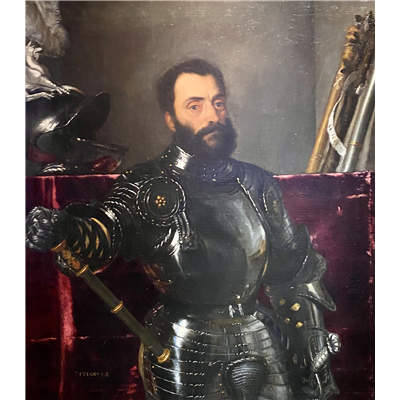 |
Born at the end of the fifteenth century, Tiziano Vecellio came from Pieve di Cadore as a child to work as an apprentice in the studio of Giovanni Bellini alongside another artist who would soon become a master, Giorgione. Catapulted into a world where painting with oil on canvas was becoming the prominent art form, he became the first artist to truly be dominant. Michelangelo famously noted 'If only he had learned to draw, Titian would have become a Great.', but his style inspired subsequent painters, from Diego Velázquez, Rubens, Van Dyck and eventually, in the twentieth century, Gerhard Richter and Cecily Brown. Charlie Hall Charlie describes himself as a passionate arts educator, lecturer, and tour guide, who bases himself in London and Italy. He has been a tour lecturer and guide for Kirker Holidays for over ten years, and also leads independent tours in Italy. He has designed and led courses for Christie’s Education and The Serpentine Gallery ‘Collector’s Circle’. The doors and the bar at Thornden Hall Arts Centre are open from 18.45; talks start at 19.30 lasting an hour with additional time for Q & As. Talks are included in the membership fee; visitors pay £8 on the evening - card only. All members and visitors need to sign in at the respective desks in the foyer before each talk. Image: Titian, Portrait of Francesco Maria della Rovere (1537) Uffizi Gallery, Florence |
|
| Monday, 08 February 2027 |
| The Art of Art Deco |
| Pamela Campbell-Johnston |
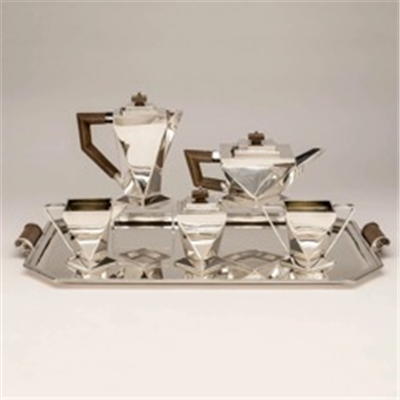 |
Art Deco has the reputation of being the most glamorous and popular style of the 20th century which was prevalent during the 1920s and 1930s. Our speaker will review the development of the style within the context of its social and economic environment and look at specific examples of objets d’arts, including silver, jewellery, furniture, ceramics, clocks and architecture. Pamela Campsbell-Johnston A freelance art consultant and lecturer, Pamela has many years’ experience lecturing to undergraduates, adult groups, and to friends and patrons of the Royal Academy of Arts where she was a staff member of the Academy’s Adult Education Department. She has conducted numerous guided tours, residential trips and gallery talks. Her specialism is in British domestic architecture and modern British art - with a particular love for the 1920s and 1930s.
The doors and the bar at Thornden Hall Arts Centre are open from 18.45; talks start at 19.30 lasting an hour with additional time for Q & As. Talks are included in the membership fee; visitors pay £8 on the evening - card only. All members and visitors need to sign in at the respective desks in the foyer before each talk. Image: Art Deco teaset, photo by Campbell-Johnston |
|
| Monday, 08 March 2027 |
| The Car in Art and the Car as Art |
| Julian Richards |
 |
Speed! Technology! Destruction! The battle cry of the Futurists WWI heralded the appearance of the car as a powerful symbol in avant-garde art. Soon the Art Deco masterpieces of the great car builders came to epitomise style, luxury and craftmanship, works of art in their own right. The romance of speed continued to be a major theme in how cars were depicted in art, but, since the 1950s the car has become art, used as a canvas for artists as celebrated as Peter Blake, Andy Warhol and Damien Hirst. This lecture will showcase the beautiful and the bizarre, celebrating the dynamic, creative, and sometimes unsettling relationship between cars and art. Julian Richards is a professional archaeologist who has worked for English Heritage, the BBC and as an independent. As a broadcaster he presented Meet the Ancestors and Blood of the Vikings for BBC2, and Mapping the Town for Radio 4. An exhibition of his own extensive collection of 'Stonehengiana' is on display at the new Stonehenge Visitor Centre. He has curated the new permanent ceramics gallery for Salisbury Museum. A popular and engaging speaker, Julian visited The Arts Society Southampton in 2022 with a talk on Passionate Potters and in 2024 with a talk on Stonehenge. He says “ With no intention of retiring, I am still passionate about Stonehenge, pots and old cars." The doors and the bar at Thornden Hall Arts Centre are open from 18.45; talks start at 19.30 lasting an hour with additional time for Q & As. Talks are included in the membership fee; visitors pay £8 on the evening - card only. All members and visitors need to sign in at the respective desks in the foyer before each talk. Image credit: Julian Richards, BMW 'Art car', 2025, Goodwood Revival meeting. |
|
| Monday, 12 April 2027 |
| Papers from Peking: Chinese Wallpaper 1700-2000 |
| Joanna Banham |
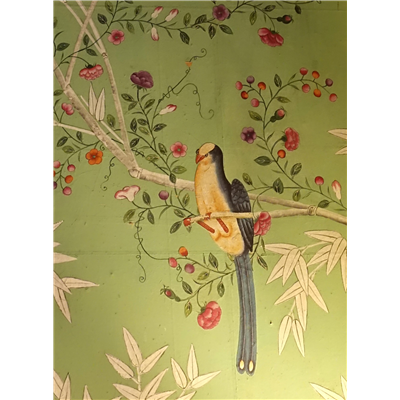 |
Chinese Wallpapers create an extraordinary visual and with their exquisitely painted largescale designs they blur the boundaries between fantasy and reality, the extraordinary and the mundane. They first appeared in Britain in the early 1700s and quickly took fashionable society by storm. Their exotic subject matter, rich colours and fine details were far superior to other wallpapers of the time and their non-repeating designs of landscapes or Chinese life formed a dazzling panorama that ran all around the room. Joanna Banham Jo Banham is a freelance curator, lecturer and writer. From 2006-2016 she was Head of Adult Learning at the Victoria & Albert Museum, and before that held similar senior educational positions at the National Portrait Gallery and at Tate Britain. She has been Curator of Leighton House and Assistant Keeper at the Whitworth Art Gallery. She has published on many aspects of Victorian and early 20th century decoration, and curated exhibitions on William Morris and the Arts and Crafts Movement in Madrid and Barcelona. Jo is now writing a book on the history of wallpaper. The doors and the bar at Thornden Hall Arts Centre are open from 18.45; talks start at 19.30 lasting an hour with additional time for Q & As. Talks are included in the membership fee; visitors pay £8 on the evening - card only. All members and visitors need to sign in at the respective desks in the foyer before each talk. Image:Wallpaper, China. Marquis and Marchioness of Normanby Bedrooms, Chatsworth House, Derbyshire, 1700-1800. Public domain, via Wikimedia Commons |
|
| Monday, 10 May 2027 |
| Hot Stuff: The Birth of Studio Glass |
| Mark Hill |
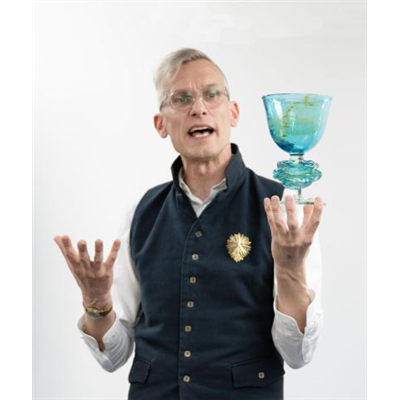 |
Glass has been made for centuries but the 1960s saw a revolution in the way it was made, opening it up to artists across the world. After looking at the historical context and the genesis of the movement, Mark examines the work of six key glass artists from the US and the UK, including Dale Chihuly, Sam Herman and Peter Layton. His talk oulines the creative journey made by these glassmakers and uses previously unseen photographs taken at the time. He will give us his top tips and an overview of the market today. Mark Hill Mark studied History of Art & Architecture before beginning his distinguished career as a porter and junior cataloguer at Bonhams, before moving to Sotheby's. He has published over 15 books on specialist subjects in the decorative arts. An experienced auctioneer, world-wide lecturer and writer, Mark is also a Freeman of the Freeman of the City of London. Our speaker is a popular one with the Society’s members and visitors who have enjoyed his previous talks and who led our Special Interests Days in 2022 on mid century modern design. He is also a familiar face on the BBC’s Antiques Road Trip and the Antiques Road Show where he describes himself as a miscellaneous expert. The doors and the bar at Thornden Hall Arts Centre are open from 18.45; talks start at 19.30 lasting an hour with additional time for Q & As. Talks are included in the membership fee; visitors pay £8 on the evening - card only. All members and visitors need to sign in at the respective desks in the foyer before each talk. |
|
| Monday, 14 June 2027 |
| Scandinavian Modern: Behind the Scenes |
| James Vaux |
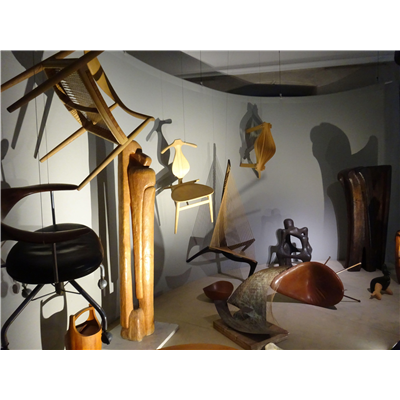 |
Plus how to survive an afternoon in IKEA: Why did Scandinavian Modern design become so popular in the mid-century and how did it turn from a revolutionary movement into just another style? This talk looks at the Nordic project to change consumer taste and shape the model citizen using scientific experimentation and social engineering. This lecture concentrates on Scandinavian Modern design in the 1950s and unpicks the factors which led to the creation of modern classics. James will outline how Sweden, Denmark, Finland and Norway broke away from Bauhaus and International Style to create softer, more organic furniture and graceful ceramics, glassware and textiles. But, using IKEA catalogues from the period, it shows just how resistant consumers were to the new, state-sanctioned, clean lines. Featuring designers including Arne Jacobsen and Alvar Aalto, the talk explores just how ‘democratic’ Scandinavian design really was and asks whether our conception of it is based on a marketing myth. The presentation revolves around three ground-breaking exhibitions to show how global conceptions of Scandinavian Modern became so completely different. And finally there are tips for how to survive an afternoon in IKEA, by learning to identify what really is Scandinavian Modern and what isn't. James Vaux James is a researcher and lecturer specialising in Nordic arts, culture, design and history. For the past two years he has been travelling across the Nordics, visiting and researching the homes and colonies of artists, writers, designers and musicians to provide first hand insights into their lives and works. James qualified as a solicitor before switching career …into banking. While running the Rothschild’s bank’s Nordic operations, James immersing himself in Scandinavia arts, culture and history and went on to study interior design and art at Sotheby’s. He has also been a DJ, promoter, record label owner, hosted a local radio show for four years and ran a community cinema. Photo credit : James Vaux courtesy of Designmuseum Denmark The doors and the bar at Thornden Hall Arts Centre are open from 18.45; talks start at 19.30 lasting an hour with additional time for Q & As. Please note that this lecture will be preceded by the AGM which starts at 7.15 Talks are included in the membership fee; visitors pay £8 on the evening - card only. All members and visitors need to sign in at the respective desks in the foyer before each talk. |
|